You Can't Walk
Elie looked at me. Her eyes narrowed, jaw set, a thin lift of the lip that felt less like anger and more like refusal.
“There is no one else to push the wheelchair besides you.”
Earlier that morning, I woke up in tears, anxiety pressing on my chest as I thought about the Weeknd concert we were going to.
“Imi.”
My muscles released themselves when I heard my mother’s voice on the phone.
“Mom, I’m going to a concert today.”
“That is nice, honey. I am sure you will have a marvellous time.”
“I won’t. I can’t.”
“Oh, honey, I wish I were there to hug you.”
I wish it could all go away with a hug, Mother.
After hanging up the phone with my mother, I called my psychiatrist in Turkey to ask him if I could smoke some marijuana. He said I could do anything I thought might help.
An hour later, we left campus in Reading for the two-hour journey. I lit my joint as soon as I took my first step outside of the dorm.
It helped at first, a brief easing of tension lifting my mood, until the familiar weight pressed back even harder.
The stiffness that had been creeping into my muscles for weeks made every step feel like walking through wet cement.
We ate at a restaurant farther from the venue than I had intended.
I wrapped my arm around Elie’s. Her upper lip lifted just a fraction, as if she had tasted something sour.
People stared at me. Some with softened eyes, some with their shoulders squared in quiet appraisal, some with their chins pulled back.
When I suggested we pack up our food and head to the underground, I saw disappointment tighten her face, my hope for understanding shrinking with it.
“You can’t walk,” she said.
Her voice, sharpened by tears into something small and mouse-like, grew too shrill for me to bear any longer.
I told the paramedics I had injured my leg. They gave me a wheelchair, letting us skip the line at the gate.
The Weeknd was my favourite artist, but I couldn’t dance to any of his songs.
The paramedics brought the wheelchair back at the end of the concert.
The next morning, I called the woman I had met days earlier while wandering through Portobello Road Market with friends.
I used the last of my strength and dropped into an empty chair next to two women. The woman on the right was staring at me.
I sighed and bet on her assumption.
Drunk. She probably assumed I was drunk.
She leaned toward me.
“I know someone who could help. He works with plant medicine. There’s an upcoming retreat in Northern England.”
The next day in Northampton, I joined three other men at the retreat, each seeking a cure. One had AIDS. Another was a heroin addict. I didn’t have the courage to ask the third why he was there.
They handed me a cup of something to drink. When I asked what it was, they told me it was medicine.
Half an hour later, a smile that I had stopped expecting long ago found my face.
My chest felt lighter, my body leaning forward as if pulled by curiosity.
“So tell me,” someone asked, “have you tried mushrooms before?”
A small wave of shock ran through me.
“What did I just drink?”
The woman I met at Portobello looked at me, her lips curled upward.
I drank the mushroom tea given to me by strangers I had met that very day. Then I entered a tipi tent they had set up in the garden of a villa. The shaman was waiting for me there.
My treatment required me to stay in that tipi tent for the entire retreat. When I asked why, they told me my walking problem was caused by not being grounded in the earth.
I had always lived in the future, leaving my mind restless from generating stories and predicting outcomes that more often than not unfolded not even merely as I expected them.
Thinking of future brought anxiety, not having my expectations met brought disappointments.
Slowly, I began to realise my physical state was mirroring back my inner disorientation.
When my mind failed to hear the alarm bells that had been echoing for years, my body carried the message instead.
Body isn’t abstract.
I couldn’t disregard its disruptions once I was refrained from basic movements.
The ground felt farther away than it was as I surrendered to my emotions that I had shoved within for 24 years.
Behind closed eyes, my memories glowed in the colours that had made them.
The tipi tent dissolved.
Suddenly, I was five years old, standing in front of my sister’s room.
There were other people in the room with her. Her shouting was meant for someone who wasn’t there.
“If Imi asked our mother for chocolate at midnight, she would try every shop to find one,” my sister said, a minute before a storm of tears broke out.
I wanted to go to her. To hug her.
Her gaze met mine, and she started screaming.
“Get out of here. Take her away. I don’t want you here.”
My hands were shaking, my gaze fixed on the ceiling.
You can’t cry. Don’t cry.
“I’m talking to you, you know,” my sister said.
I couldn’t look at her without tears trailing down my cheeks.
The scene shifted again.
I was in bed when the alarm sounded, my eyelids battling against waking.
It was still dark when I forced myself to get out of bed.
I sat at the piano and began practising without pressing the keys.
Later, I came home from school and saw my father in the living room.
“Come on, it’s time to practice piano.”
“I already did my hour today, Dad,” I said, forcing myself to smile.
“When?”
“I don’t know why, but I woke up very early today, so I thought I could make use of it by practising.”
His dimples appeared as his cheeks lifted.
I suddenly craved chocolate and went toward the kitchen.
I heard my sisters humming a tune I recognised. It was the song she had written to make fun of me.
The chorus started replaying over and over like a broken record.
“Don’t always say yes,
when you are asked
If you are hungry.
Look at how fat you are.”
The room began to spin.
I leaned against the wall. My vision blurred, and I fell to the floor.
Unknown minutes later, I was in bed with a bowl of soup beside me.
I tried to get up.
My chest tightened, as if the air in the room had grown heavier.
“You can forget about that school you dream about if you can’t get a scholarship.”
I never forgave myself for being ill.
I started to shake.
I held back my tears, torn between the urge to break down and the desire not to disturb the others who were also searching for healing.
As I held my breath to stay silent, a hiccuping sob escaped.
A voice that sounded distant said:
“Let it out.”
It was the shaman, sitting with me in the tipi tent through the night.
My self-monitoring was still too strong.
“LET IT OUT!” the shaman shouted.
So did I.
You cannot walk.
I wish I were there to hug you.
You can smoke marijuana if it helps.
You’re wasting your life.
Are you hungry again?
You are a failure.
There is no one else to push the chair besides you.
Are you drunk?
Look! The girl over there is about to faint.
It took root.
There was no exit.
I didn’t talk about any of it until I started writing. I couldn’t.
When life hits you with something big like loss, change or rupture, your old self starts to shed. You pull away from who you were. You cocoon. You go quiet. You wait for the next version to form.
I’ve been through so many moments in my life where I felt unlovable. They didn’t always come from something real, shaped by how I saw things back then.
They look different now when I view them from another perspective.
I was diagnosed with Parkinson’s disease at 25.
There isn't any perspective that could change that.
The idea stayed with me, that I was deficient by nature.
Have you ever had a thought so threatening, so foreign to your identity, that admitting it felt like destroying the self you’ve spent your life building?
That’s when the compass reveals it’s secret, the loss is not a danger it is an anchor.
In the end, we find ourselves in a place where one is forged to rebuild again.
"Remember, getting unstuck isn't about having all the answers—it's about being willing to ask better questions."
- Traci ❤️
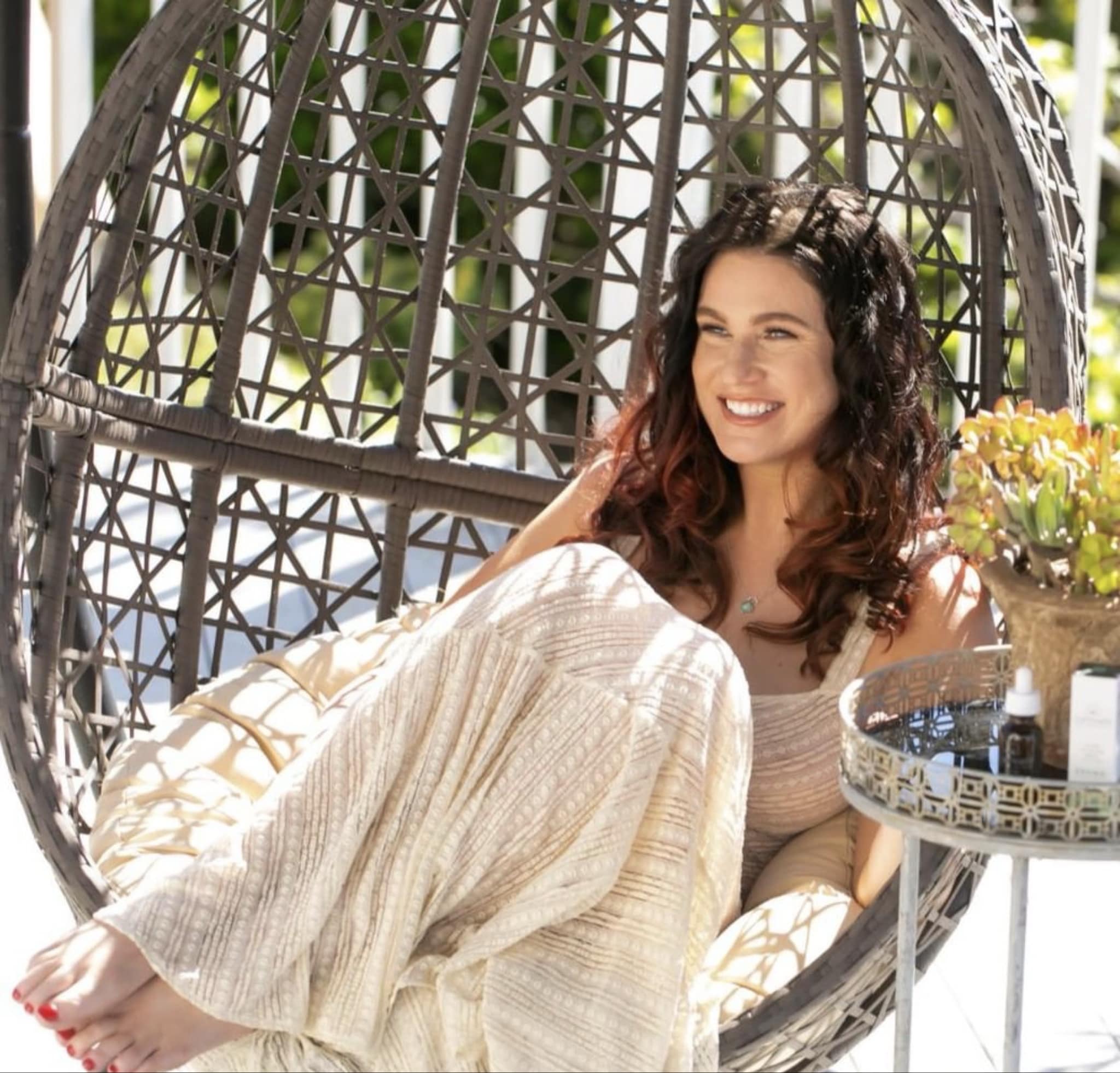
About Traci Edwards
Traci Edwards is the founder of Let's Get Unstuck, a personal growth platform born from her own journey through feeling stuck, afraid, and uncertain at 44. After discovering transformational coaching wisdom that changed her life, she created this space to share the voices, stories, and insights that helped her—and might help you too.
Through honest reflections and curated coaching segments, Traci invites others to explore what it means to get unstuck, find purpose, and live with more courage and clarity.
More Posts You Might Like
Continue exploring stories and insights
My Mother-In-Law Pressured Me to Have a Baby and Almost Broke Me
Ali Hall has known since childhood that she wanted to live a childfree life, but choosing not to hav...
.jpeg)
Grief and Aikido: Relaxing Under Pressure
In this thoughtful reflection, Gyani Richards explores how the principles of Aikido offer a powerful...
Why a Dietitian is the Missing Piece in Your Perimenopause Journey
Kelly is a wife, a mom of three, and a lifelong athlete. When she began navigating perimenopause her...

Good Girl Syndrome Gave Me a Dissociative Disorder
"I had officially become the good girl, and all it cost me was my sense of self." Writer, journal...
Let's Talk About It (0 comments)
Leave a Comment
Be the first to share your thoughts!