Identity Crisis
Section 1
My daughter was two days old when they took me away in handcuffs.
Aislinn Talia Kathleen. Born at home, the way we’d planned. My older children from my first marriage were there for the summer—they got to see their baby sister come into the world, all of us gathered around Beth in that sacred, messy moment of birth. We were tired and overwhelmed and so full of hope it hurt. We called family to announce her. Look at this life we’re building.
My parents were polite, but it didn’t come across as joyful or excited.
But I didn’t have time to think about that because everything was happening at once. My older kids—the ones who’d just witnessed their sister’s birth—had been living with something I’d only recently discovered. Their mother’s brother Danny had previously sexually assaulted my daughter Deborah. And he was living in the house with all of them.
I’d already filed for a restraining order. I had it—handwritten statements from the children, documentation of what was happening, a judge’s signature. The protection was supposed to be there.
The state where my ex-wife lived didn’t see it that way. They issued a warrant. Custodial interference.
Two days after Aislinn was born—while she still had that newborn smell, while Beth was still bleeding and exhausted—they came. Police at the door. I was cuffed and loaded into a transport van. Hands chained. Feet shackled. The children I’d been trying to protect were collected and handed back to my ex-wife. Back to the house where Danny lived.
I sat in the back of that van for two days as they drove me across the country. Beth was alone with an infant. My older children were returned to their abuser. And I was watching state lines pass through a small window, helpless.
Bail was set at $50,000. I owned a home—I could put it up. But the bondsman needed a local co-signer. Someone who lived in that state who could vouch for me.
I called my parents.
They said yes. They agreed to help. We had a plan.
I spent two and a half months in that jail cell, praying. Actually praying—something I hadn’t done in years. Reaching back toward the God they’d taught me about when I was young, the one who was supposed to protect the innocent and uphold justice. I believed, or I was trying to believe, that doing the right thing would lead to the right outcome. That protecting children from abuse was what God would want. That faith and righteousness would see me through.
My attorney was confident. The evidence was overwhelming. I wasn’t kidnapping my children—I was protecting them. Any reasonable judge would see that. But getting in front of a judge would take time. Another six months, maybe more.
My ex-wife was already moving to terminate my rights while I sat there.
When it finally came time for my parents to sign the bail paperwork, they were at the bondsman’s office. They called me. I heard my mother’s voice on the other end of the line—that familiar voice from my childhood, the one that used to pray over me at bedtime.
“God told me to leave you in jail.”
The words didn’t land right away. I had to ask her to repeat it. She did. Same words. Same tone—certain, calm, righteous.
God told me to leave you in jail.
I don’t know how to describe what that felt like. Betrayal isn’t a big enough word. It was like falling through space and realizing there’s no ground. I’d been praying to the same God she claimed to hear from. I’d been trying to do the right thing. And her God—their God—told her to leave me there.
My attorney laid it out: we could fight this and probably win. But it would take another six months minimum. Six more months of my ex-wife working to erase me from my older children’s lives. Six more months of Beth alone with a newborn, trying to survive. Six more months of me in a cell while my kids lived with their abuser.
Or I could take a plea. Not an admission of guilt, but a felony on my record. And I could go home in two weeks.
There wasn’t really a choice.
I took the plea. Two weeks later, I walked out. I got a ride all the way back home. Halfway across the country. I didn’t go to my parents’ house. Didn’t call them.
I went home to Beth and Aislinn.
I didn’t speak to my parents again for ten years.
Section 2.
During those ten years, they didn’t disappear entirely. They maintained a relationship with my older children from my first marriage. They’d meet up with them. Take them to dinner. Be grandparents—the kind who showed up, who remembered birthdays, who were present. Posted pictures on Facebook.
Just not for me. Not for Beth. Not for Aislinn.
In 2010, we had twins. Allycia and Neal. The birth was supposed to be routine but Beth died. She was gone and then she wasn’t—they brought her back, worked on her, lost her again, brought her back again. Twice. I held two new babies and watched my wife die and return in the same breath. You don’t prepare for that. There’s no preparing for that.
Five years later, my sister got married. She asked me to come. She wanted me there, wanted the family whole again, at least for one day. For her, I agreed to reconcile.
The twins were five. Aislinn was ten. We started talking to my parents again. Calls here and there. The grandkids would get on the phone and talk to people they’d never met.
Because that’s the thing: my three children from Beth—Cody, Rambler, and Neal—have never met their grandparents in person. Not once. The reconciliation was between my parents and me. The relationship with my children existed only in brief phone conversations I’d orchestrate, putting kids on the line to talk to disembodied voices they were supposed to call Grandma and Grandpa.
Birthday cards came sometimes. Gift cards at Christmas, sporadically. The kids would get excited when something showed up—Look, Grandma and Grandpa remembered! I’d watch them and feel something complicated I couldn’t name. Relief that my kids were getting something. Anger that it was so little. Grief that this was what passed for a relationship.
When Aislinn was thirteen, they sat me down. They’d been working up to it—I could tell something was coming. They told me they were trans. They’d chosen the name Cody.
I didn’t handle it well.
I want to be clear about that. I didn’t yell. I didn’t reject them. But I didn’t handle it well.
I’d been raised in the same religious system that taught my mother to hear God tell her to abandon her son in jail. I wasn’t in that system anymore—I’d left it behind, built a life with a pagan witch who loved more freely than any Christian I’d ever known. But the programming was still there, running in the background. The discomfort. The resistance. The feeling that something was wrong, even if I couldn’t articulate what.
I told Cody I needed time. That I’d try. That I loved them and would do my best.
I failed constantly.
Every conversation, every “she” that came out of my mouth automatically. Thirteen years of muscle memory, of “my daughter,” of daddy-daughter dances and Disney princess dresses and all the small moments that had built an image in my head of who this person was. Every time Cody corrected me, I could see it land. The small hurt. The exhaustion of having to teach your own parent to see you.
I was grieving something I couldn’t explain. Not Cody—they were right there. But some version of them I’d constructed. Some future I’d imagined. I was mourning a daughter who had never actually existed outside my own projections.
It took until they were fourteen, maybe fifteen, before I started to actually see them. And even then, we struggled. I was the dad, the masculine authority, trying to understand a child who was navigating something I had no framework for. We bumped up against each other for years. Until they were eighteen.
My parents stopped sending gifts for Cody the year they came out.
It was surgical. Christmas would come—cards for the twins, gift cards, the usual stuff. Nothing for Cody. Their birthday would pass. Nothing. Not even acknowledgment. Like they’d just been erased from the family while their siblings remained.
Last year, Allycia told me they were trans too. They chose the name Rambler.
By then, I knew better. I knew what mattered. There was no long adjustment period with Rambler, no years of stumbling. Just: I see you. I love you. Let’s do this. Yes, pronouns are still a struggle some days. It’s not the acceptance though it’s when I don’t consciously think before I speak. They don’t doubt my love. They know I’m imperfect, that I accept them.
This past August, Beth died.
I sent a message to the family group chat. Your sister-in-law/daughter-in-law is gone. The responses came—shock, condolences, the things people say when someone dies suddenly.
A week and a half later, my mother posted a photo in the same chat thread. A huge yard sign they’d put up. Anti-abortion. Big letters. Posted right there under the conversation about Beth’s death.
I was trying to breathe. Trying to figure out how to feed my kids, how to get out of bed, how to exist in a world where Beth wasn’t. And there was my mother, preaching in a group chat. Tone-deaf doesn’t even begin to cover it.
November 28th. My birthday. They called. Sang Happy Birthday, all cheerful and warm. We talked for maybe five minutes before it started.
The world is so messed up now. People don’t understand the truth anymore. There are only two genders—that’s one of the biggest problems with society today.
I’ve learned, over the years, how to set boundaries. How to protect what matters. I didn’t argue. Didn’t engage. Just: “Hey, I’ve got a work call coming in. Love you guys. Talk soon.”
I hung up.
This Christmas, three gift cards arrived. One for me. One for each of the twins.
Nothing for Cody.
Section 3.
Beth never pushed me on Cody. She didn’t demand I figure it out faster, didn’t shame me for struggling. She just held space—for both of us. For Cody to be who they were. For me to fumble my way toward acceptance. She let us be imperfect with each other while we worked it out.
She loved without conditions. Without requirements. She saw people exactly where they were and met them there.
The irony isn’t lost on me. My parents, with their prayers and their scripture and their certainty about God’s will, couldn’t manage to love their own grandchildren when those grandchildren, didn’t fit the mold. Beth—a pagan, a witch, someone my parents would have said was lost—loved more purely than anyone I’ve ever known.
She taught me that acceptance isn’t a switch. It’s a practice. You have to keep choosing it, keep walking toward it, even when everything in you wants to retreat to what’s familiar.
Somewhere around Cody’s eighteenth birthday, something shifted. The resistance in me just... stopped. I stopped mourning who I thought they were supposed to be and started actually seeing who they were. We’ve gotten closer the last two years.
Now we talk almost every day. I show up for everything—went and got my nails done so they could practice techniques for beauty school. We laugh about it, but it matters. Showing up matters. Being present for who your kids actually are, not who you wanted them to be.
Cody’s about to graduate. They’re engaged to a good man who loves them. They’re building a whole life.
Rambler’s still becoming. Still unfolding into themselves. And this time I get to witness it without the years of resistance I put Cody through.
They’re both thriving.
Not because they figured out who they were—they always knew that.
They’re thriving because someone finally let them be it.
Section 4. What We’re Really Looking At
My parents practice conditional love. That’s the clinical term for it. Love as a transaction—extended when you meet the conditions, withheld when you don’t.
The pattern is consistent and deliberate. The twins get gifts. Cody doesn’t. Relationship maintained with the children who fit, relationship erased with the one who doesn’t. It’s not accidental. It’s strategic.
This is coercive control. The threat of abandonment as leverage for compliance. The same mechanism was at play when they left me in jail—not really about the legal situation, but about divorce. Their belief that my first marriage failing was my sin, and everything that came after—the new family, the complications, the messy reality of trying to protect children—was tainted by that original failure.
When you can claim God told you to do something cruel, you insulate yourself from accountability. You’re not being cruel. You’re being obedient to a higher power. You’re not abandoning your grandchild. You’re taking a righteous stand.
This is what religious rigidity looks like when it functions as identity defense. My parents’ sense of self is wound so tightly around their beliefs that any challenge to those beliefs feels like a threat to their existence. Cody’s transness isn’t just a disagreement—it’s an assault on their entire understanding of reality, of order, of God’s design.
To accept Cody as they are would require my parents to question everything. The framework that has organized their entire lives. The certainty they’ve built their identity on.
So they don’t.
They choose their identity over relationships. They choose certainty over love. They choose the comfort of their worldview over knowing their grandchild.
The birthday phone call demonstrates this perfectly. They can’t just wish me a happy birthday. Can’t just be present for one moment. They have to preach. Have to reassert their beliefs. “There are only two genders.” Said to a man with two trans children. Four months after his wife died.
The cruelty is almost breathtaking in its obliviousness.
But here’s what I’ve learned: their rigidity is not my problem to fix.
I’ve spent years learning to set boundaries—not from anger, but from protection. I can love my parents and refuse to let their beliefs harm my children. I can maintain some form of relationship while making it clear that certain topics are closed. I can end a phone call when it becomes destructive.
That’s what I did on my birthday. Not with anger. With a boundary.
I’ve chosen to love them in a way they don’t know how to love me. I stay in some form of contact while protecting the people who matter most. That’s not weakness. That’s strength born from watching what real love looks like.
Because here’s the truth my parents can’t see: love without acceptance isn’t love at all. It’s control wearing a mask of concern. It’s conditionality dressed up as righteousness.
Real love—the kind Beth showed me—doesn’t require people to be anything other than who they are. It doesn’t withhold affection when they fail to meet expectations. It doesn’t erase them when they don’t conform.
Real love shows up. Even when it’s uncomfortable. Even when it challenges everything you thought you knew. Even when it requires you to let go of who you thought someone was supposed to be.
My parents love an idea of me. An idea of their grandchildren. When we don’t match the idea, the love evaporates.
That’s not love.
That’s narcissism. That’s their own identity crisis masquerading as moral clarity.
Section 5 .
Cody is about to walk across a stage and receive their diploma. They’re engaged to someone who sees them clearly and loves what they see. They’ve built a life that’s authentic and whole and entirely theirs. They’re not hiding. They’re not performing. They’re just living.
Rambler is finding their way. Becoming more fully themselves every day.
Neither of them are in crisis about their identity. They know exactly who they are.
The crisis belongs to the people who can’t accept them.
That’s the truth sitting at the center of all of this: the identity crisis was never about the people who claim identities outside the norm. It’s about the people who need everyone else to be a mirror. Who need conformity to feel secure. Who mistake rigidity for righteousness and control for care.
My parents don’t know who they are without their beliefs. They can’t separate their identity from their ideology. So when someone challenges that ideology—just by existing in a way that contradicts it—it feels like an existential threat.
That’s their crisis. Not Cody’s. Not Rambler’s.
My children know who they are. They’re not confused. They’re not lost. They’re not struggling with their identity.
They’re struggling with other people’s inability to accept it.
There’s a difference.
Acceptance is the true measure of love. Not agreement. Not approval. Acceptance. The ability to see someone fully—in all their complexity, in all their difference from what you expected—and choose relationship anyway.
That’s what Beth taught me. That’s what I’m still learning. That’s what my parents may never understand.
And that’s okay. Their journey isn’t mine to control.
I choose my children. Every single time. Without hesitation.
I choose to love people where they are, not where I want them to be.
I choose to show up—with painted nails if that’s what it takes—because being present matters more than being comfortable.
And I choose to name this clearly: the people obsessed with everyone else’s identity are the ones in crisis about their own.
Cody and Rambler are fine. More than fine.
They’re thriving.
The crisis was never theirs to carry.
"Remember, getting unstuck isn't about having all the answers—it's about being willing to ask better questions."
- Traci ❤️
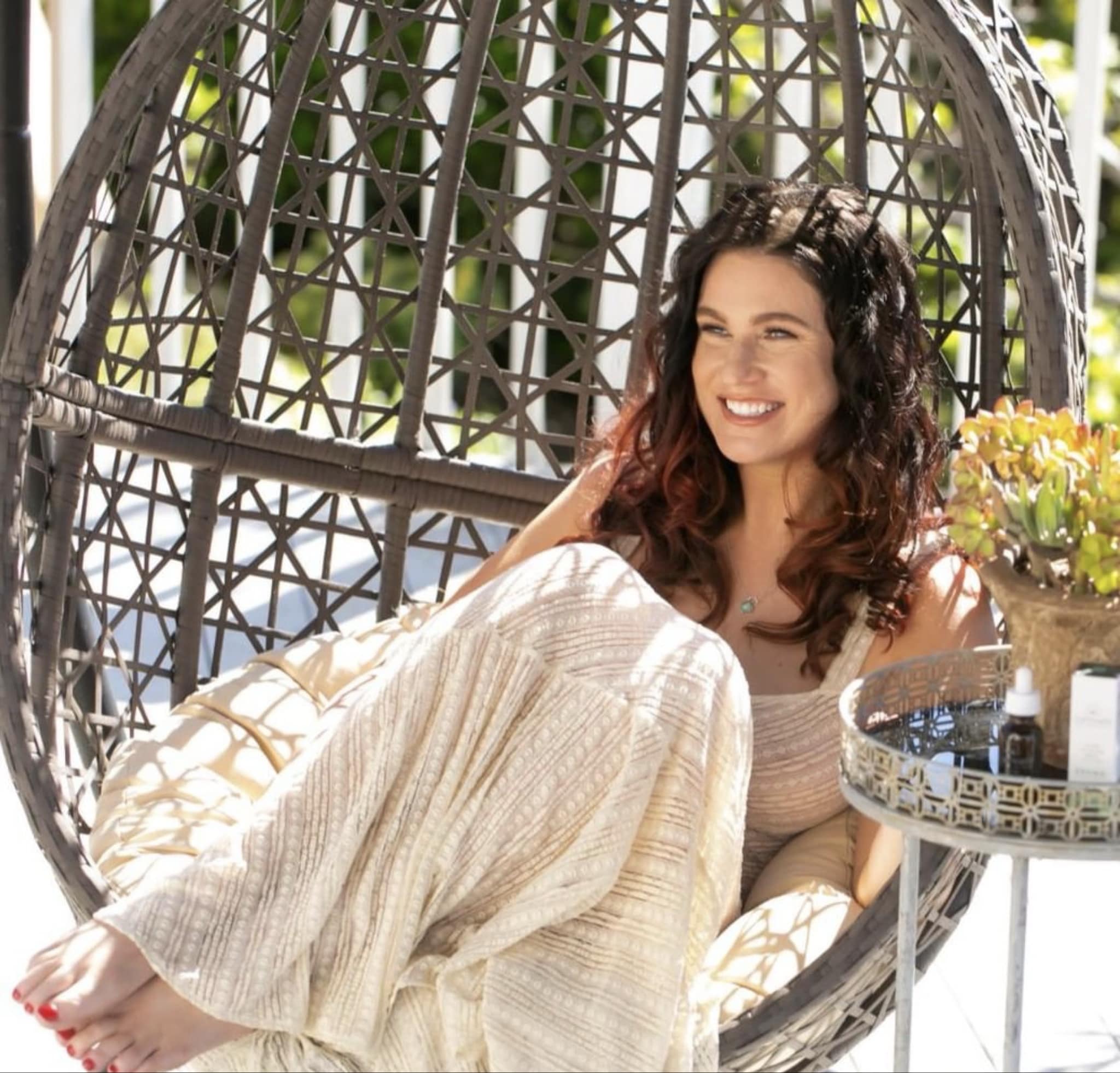
About Traci Edwards
Traci Edwards is the founder of Let's Get Unstuck, a personal growth platform born from her own journey through feeling stuck, afraid, and uncertain at 44. After discovering transformational coaching wisdom that changed her life, she created this space to share the voices, stories, and insights that helped her—and might help you too.
Through honest reflections and curated coaching segments, Traci invites others to explore what it means to get unstuck, find purpose, and live with more courage and clarity.
More Posts You Might Like
Continue exploring stories and insights
My Mother-In-Law Pressured Me to Have a Baby and Almost Broke Me
Ali Hall has known since childhood that she wanted to live a childfree life, but choosing not to hav...
.jpeg)
Grief and Aikido: Relaxing Under Pressure
In this thoughtful reflection, Gyani Richards explores how the principles of Aikido offer a powerful...
Why a Dietitian is the Missing Piece in Your Perimenopause Journey
Kelly is a wife, a mom of three, and a lifelong athlete. When she began navigating perimenopause her...

Good Girl Syndrome Gave Me a Dissociative Disorder
"I had officially become the good girl, and all it cost me was my sense of self." Writer, journal...
Let's Talk About It (0 comments)
Leave a Comment
Be the first to share your thoughts!