A Love Story that Could have Gone Either Way
.jpg)
“Blessed.”
Of all the words I might have expected that day, that was the one I least wanted to hear.
It came from Paul—the proud young father who, along with his girlfriend, Claire, held the fate of the newborn we hoped to adopt.
That single word sent a chill through me. Blessed. It sounded final, like he was already claiming what I was hoping would still be ours.
“We named him Ryan,” Paul said. “After Claire’s brother.”
I gripped the phone, desperate to sound calm. The wrong response could shift everything.
“I’m so happy for you both,” I managed. “Are you still—”
“Yes,” he said quickly. “We haven’t changed our minds.”
A month earlier, my husband, Chris, and I had received The Call.
After six rounds of infertility treatments and years of heartbreak, we’d finally decided to pursue adoption. I quit my sixty- to seventy-hour-a-week job so I could focus on the process without distraction. A year later, we submitted our profile and, within a month, got The Call that a couple was interested in us.
We’d expected it to take a year—maybe longer. New profiles usually went straight to the bottom of the stack. But we were one of just a handful of couples willing to also be featured on the agency’s website (this was well before social media took over our lives and everyone got a little lax about privacy). They even asked to put ours at the top, calling it “the best they’d ever seen.” (Thank you, years as an ad exec.)
Still, the chances of anyone finding us felt impossibly slim.
Claire and Paul were college seniors, concerned that a baby would derail their relationship and her dream of being a stay-at-home mom. Out of all the families waiting to adopt, they’d chosen us—drawn to the steadiness of our ten-year marriage, our survival through infertility, and my plan to be home full-time. We reminded them, they said, of an older version of themselves.
When we met them at the adoption agency, our social worker, Margo, walked us into a small room that smelled faintly of coffee and nerves.
Claire hardly looked pregnant at all—tall and slim, hiding her belly beneath a loose blouse—even though she was eight months along. She dabbed her eyes with a tissue before shaking my hand.
They took the couch; we sat in the wooden chairs across from them. The social worker slid into an armchair beside us.
I could barely speak; Claire couldn’t either. It was the men who found their footing first.
Paul was kind and steady, doing most of the talking with an easy warmth that helped me breathe. Chris and Paul fell into an easy banter as if old college friends, while Claire and I fought back tears.
As the conversation unfolded, we learned that Claire hadn’t realized she was pregnant until she was five months along. She played volleyball and had assumed she’d just missed a period from training. By the time she found out, there were only two choices left—keep the baby or place him for adoption.
The coincidences.
At one point, Claire spoke up about how they decided to meet us. “I found you on the website,” she said. “My mom went through piles of profiles at the agency. She told me she’d found the perfect couple. Turns out, we both picked you.”
It was one of the few things she said that day, but it stayed with me—proof, in that fragile moment, that we were meant to find each other.
As the conversation eased, we began sharing more details about ourselves and Chris mentioned my artistic talent—I’d been in a lighthouse-drawing phase lately. Not for any deep reason, just because I thought the black-ink sketches would look good in our family room.
Paul’s eyebrows lifted. “That’s wild,” he said. “My dad had been on a lighthouse kick for a while, taking pictures of them from his boat on Lake Michigan.”
For a moment, all of us went still. After all the uncertainty and waiting, the coincidence felt almost electric—like a sign we didn’t want to name yet. Maybe it meant nothing. But in that charged silence, I felt the first faint glimmer of hope.
Later, when Paul asked, “Would you be willing to take him home from the hospital when Claire’s discharged after a couple days?”
Even though the social worker had warned us this question was coming, my heart still stuttered.
At the time, Illinois law required birth parents to wait seventy-two hours after delivery before they can sign over their parental rights—three long days meant to be sure they haven’t rushed into a decision. But we were allowed to take the baby home earlier, at forty-eight hours, as foster parents, rather than have him placed temporarily with strangers during that waiting period. We knew they could still change their minds before—or even after—we brought him home. We said yes anyway.
We left the meeting unsure if they truly liked us, but we went home and got to work anyway—painting the nursery bright green and yellow with a circus-elephant border (neutral enough in case it all fell through). We stocked up on bottles, diapers, a car seat, and waited. That waiting—after years of infertility—was its own special kind of ache. Something you don’t really get used to.
Still, we were closer to a baby than ever before.
The arrival.
A few days before the due date, Margo called.
“He’s here,” she said. “Six and a half pounds. Perfectly healthy.”
She put Paul on the line.
“And how are you feeling?” I asked.
“Blessed,” he said.
The word I didn’t expect to hear. The word that made my stomach drop.
Two days later, we packed the diaper bag and, with my parents along for moral support—and an extra set of hands for our first week as parents—started toward the hospital, nerves shot and hearts racing.
Barely out of the driveway, Margo called.
“They’re very emotional,” she warned. “This could go either way. Be prepared—we might have to call and tell you to turn around.”
I tried to protect myself with logic and mind games. If they changed their minds, I told myself, it would hurt us far less to give him back than it would hurt them to let him go. I could pretend we were just babysitting, not grow attached. But I wasn’t fooling anyone, least of all myself.
We made it to the hospital without another call. Margo met us in the lobby, face tight with caution. Another social worker, Tina, was still in the room with Claire and Paul.
Under the weight of uncertainty, we signed the preliminary foster paperwork. Seeing the name typed out—E P L H (I’m abbreviating here for privacy)—sent me into quiet sobs. The P was for Paul. L was for Chris’s grandpa who was born the same day.
They called him Ryan. In our hearts, he was already E.
We waited. And waited.
Finally, Tina emerged, her face carrying that careful blend of hope and restraint. “They’re ready.”
The hallway blurred as we followed her. Inside, Paul sat on the edge of the bed, red-eyed but smiling. We were introduced to Claire’s mom, who looked toward my parents and said, “You must be the new grandparents.”
I hesitated when I saw Claire in the rocking chair, cradling the baby as she rocked gently, her eyes fixed on him with unmistakable love.
Claire’s mom gave a small wave, encouraging us to come closer. We edged slowly toward what we hoped would be our baby. But in that moment, E was Ryan—her baby. My heart pounded in my ears, a jumble of emotions rising I didn’t yet have names for.
E’s eyes were closed, his chin cleft like Claire’s, so much hair for someone so small. He was perfect.
After a long silence, Claire stood. She looked at me, then at E, and stepped forward. Without a word, she placed him in my arms. I sat in her chair and began to rock. It felt scripted and sacred at once.
Tears streamed down my face—an unexpected rush of sorrow that overtook everything else. I couldn’t imagine what Claire and Paul must have been feeling as they prepared to say goodbye.
Chris knelt beside me, touching E’s cheek.
When it was time to say goodbye, Claire hugged me. “You’ll make a wonderful mom,” she said. I thanked her, terrified she could still change her mind.
She kissed E’s cheek. “You’ll be in very good hands,” she whispered to him. “They’ll love you so much. I love you.”
Paul kissed his forehead. “I love you,” he said simply.
More waiting.
We brought E home after a crash course in bathing and feeding, still half in disbelief that they were letting us leave with him. My parents stayed with us, unsure whether to celebrate or hold their breath. Claire and Paul were scheduled to sign at ten the next morning.
Morning came with feedings and diaper changes.
Ten o’clock came and went.
Eleven.
Eleven-thirty. Then the phone rang.
“Claire isn’t feeling well,” Margo said. “They’ll come in later.”
And so we waited.
E never fussed. He ate like a champ and slept like an angel. It was impossible not to become attached. To love him.
By dusk, we all sat together in the dim family room, barely speaking.
I cradled E and watched the sun drop below the trees until we sat in near darkness—not bothering to turn on the lights, afraid to move, afraid to break the spell.
Unable to bear growing more attached, I handed him to my dad, who sat beside me. I broke down sobbing. I was terrified to love him more than I already did.
It felt like forever before the phone rang again.
“They signed the papers,” Margo said.
We cheered, cried, called everyone we knew. Yet even in our joy, I felt a quiet ache for Claire and Paul—their loss intertwined with our gain.
Five Years Later
We waved to E—gelled hair, contagious grin, eyes huge behind the bus window on his first day of kindergarten. My heart clenched as his tiny hand lifted in goodbye. Our Lego-obsessed boy who said, “I love you further than space, a hundred sixty-four times around the Earth, and a billion times around the moon.”
Our son.
As the bus pulled away, I buried my face in Chris’s chest and cried. Time had moved too fast. E had become a funny, kind, endlessly curious child—Claire and Paul’s extraordinary gift.
We’d talked about adopting again, but everything about E’s arrival felt so perfect that we were afraid to upset the apple cart. He was our one and only, and somehow that felt complete.
I was lucky enough to stay home with him until he was fifteen, when Chris and I split and I had to give up my life as a low paid green-living podcast sidekick to get a real job with benefits.
Today
E is in the Navy now, stationed in California. He’s fallen in love with the ocean and mountains and probably won’t return to mostly flat, boring Illinois. I miss him deeply, but I’m endlessly grateful to his biological parents for giving me the gift of motherhood—the gift of knowing this remarkable, charismatic young man.
I’m also grateful for the bond E has formed with my husband, his stepdad. It helped that E was still in high school when we met. These days, E texts him more than he does me—sharing his latest cooking triumphs, asking advice about his apartment, and probably things I’ll never know. And while part of me wishes he’d message me more often, I’m genuinely thrilled they have that kind of relationship.
He was home recently for a long weekend. The days blurred together, moving faster than I could hold on. He’ll be twenty-five in a few months and heading into special training. We don’t know how often we’ll see him in the next few years—his Navy work may take him to new places, new adventures.
Goodbyes are usually filled with tears—mine. Sometimes I manage to hold them back until after I drop him off at the airport. He just smiles that knowing smile.
This time, knowing we’ll visit him in California before training begins, the tears stayed put. But I know the next goodbye will undo me.
And every time, I try to remember the word blessed. E is a rare soul, loved by so many. And no matter how far away life carries him, I’m comforted by the love that began all those years ago—the love that almost wasn’t mine to keep."Remember, getting unstuck isn't about having all the answers—it's about being willing to ask better questions."
- Traci ❤️
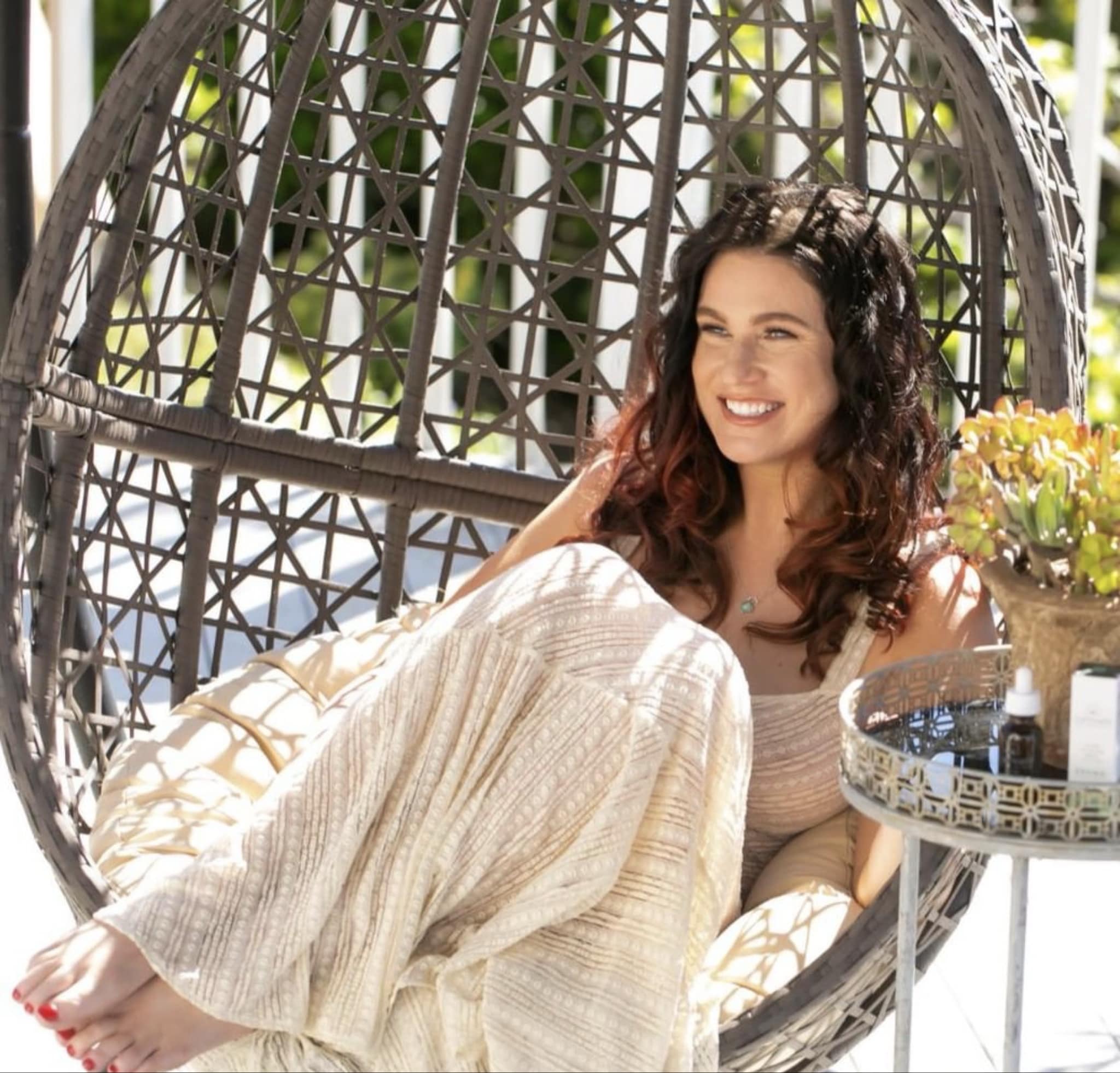
About Traci Edwards
Traci Edwards is the founder of Let's Get Unstuck, a personal growth platform born from her own journey through feeling stuck, afraid, and uncertain at 44. After discovering transformational coaching wisdom that changed her life, she created this space to share the voices, stories, and insights that helped her—and might help you too.
Through honest reflections and curated coaching segments, Traci invites others to explore what it means to get unstuck, find purpose, and live with more courage and clarity.
More Posts You Might Like
Continue exploring stories and insights
My Mother-In-Law Pressured Me to Have a Baby and Almost Broke Me
Ali Hall has known since childhood that she wanted to live a childfree life, but choosing not to hav...
.jpeg)
Grief and Aikido: Relaxing Under Pressure
In this thoughtful reflection, Gyani Richards explores how the principles of Aikido offer a powerful...
Why a Dietitian is the Missing Piece in Your Perimenopause Journey
Kelly is a wife, a mom of three, and a lifelong athlete. When she began navigating perimenopause her...

Good Girl Syndrome Gave Me a Dissociative Disorder
"I had officially become the good girl, and all it cost me was my sense of self." Writer, journal...