18 Months Left to Live
 (1).jpeg)
18 Months Left to Live
For anyone holding something they can’t yet say out loud.
As I round the corner of the year mark since being diagnosed with cancer at the age of thirty-two, and the end of being in active treatment, I am faced with what every cancer patient must face: waiting and worrying.
‘Worrying’ and I have a life-long history. My family likes to joke that I was born worrying.
I came into this world with a look of concern and a physical wrinkle between my eyebrows that only deepened their observation.
As a young child, I was mostly social and happy.
My parents got divorced when I was just a year old, so I don’t have memories that weren’t split between two homes. Two very differing homes.
One full of ease and lack of structure and the other, strict and pressured to become a successful, well rounded, human being.
I bounced back and forth between these worlds with innocence and excitement for my future.
The physical wrinkle deemed a worry mark between my eyebrows held no power over me in those early years.
In the winter of 2001, I was outside playing in the snow at the house of expectation and strictness.
I ran around with a friend who lived down the street.
It was one of those winters where schools were frequently closed due to the amount of snowfall.
One where you sat in front of the TV hoping your school’s name would flash “closed.”
This was one of those days.
The only thing on my mind was the cool air on my cheeks and promise of hot coco after successfully building a snowman.
At just nine years old, you couldn’t ask for much more.
With only half a snowman built, suddenly I was being asked to come inside. I met this with angst and annoyance at prematurely ending my happy afternoon of joy in the snow.
I dragged myself to our backdoor, vocalizing my desire to continue my afternoon outside with my friend.
I was only met with silence to my request and that I to continue to take off the layers of clothing keeping me warm that day. I should have known then, in that moment, that something was wrong.
Normally my resistance to what was being asked of me was met with anger and frustration rather than a quiet request to continue.
As I walked into the kitchen, my step mom and siblings sat around the table.
My father asked me to sit with him on his lap. At this request, my gut put the pieces together that indeed, something was very wrong.
Eyes locked into mine, my father said,
“I am so sorry to say that your mother has died.”
It would be another twelve years before I knew how or why my mother died.
In that moment, the house full of ease and lack of structure ended and the wrinkle between my eyebrows tied itself fully to my relationship with worrying.
In the years that passed, it’s not to say that I didn’t find joy again.
I found it in the friendships of those who could pull it out of me, in moments with family, and eventually with some healing, began to find it in myself.
As I grew older, the strict, success-driven household set me up for a good education and ability to go to college. And worrying cemented itself to my ability to succeed in that defined definition of success.
For various reasons, I locked my mother’s death in a box I refused to open.
Her name was never mentioned as I grew up so locking it away felt safe and practical.
I didn’t ask questions because bringing her up felt wrong and uncomfortable. And that is not to say my memories of her weren’t tightly wrapped in love.
I missed her so deeply that the thought of speaking the tragedy of her death into existence was too much to bear.
At the age of twenty-one, twelve years after that snowy day, the box I had locked began to beckon.
As if my gut knew that her limited existence since the moment of her passing held information I should know.
Asking my sister what had happened all those years ago felt like the hardest words to speak out loud.
Shame and embarrassment engulfed me, unsure why it had taken over a decade to face this.
She gently informed me that our mother had died of alcoholism.
We sat in her car outside of my dorm and in a singular moment, all that I knew and trusted was thrown into the air.
The box that I kept tightly shut shattered wide open, no longer safe and practical for me to keep closed.
That same year I found the love of my life and post graduation I ran us both across the country,
thousands of miles away from our families.
I didn’t know a lot, but I did know that I needed space. In this case, as much as was physically possible.
For seven years, we ran through beautiful forests, adventuring in nature as much as our time allowed.
The dense greenery and freedom began to heal my heart. I felt my mom more than I ever had, as though she had led me there knowing it would be the best thing for my soul.
COVID halted our adventuring and begged for the return to our families.
We got married and we felt called to settle the endless, exciting adventure for a new, slower one.
My heart had the space it needed, and we began to build a dream to step into something I had been missing since that snow day twenty three years prior: motherhood.
But life had other plans.
In the three years since our return to our families, I’ve lost two pregnancies. Miscarriages began cracking my soul and reminding me of my relationship with worrying.
I thought of my mother often and the box I once filled with the tragedy of her death. I promised myself I would find a way to not box the story of my lost babies as I once had with her.
And by the time I sat in the office of our fertility doctor where they discovered two masses on my ovaries that would diagnose me with cancer, I realized I wouldn’t keep my story boxed either.
At thirty two, I was diagnosed with Stage III endometrial cancer and lost my entire reproductive system.
When I was first diagnosed, I did what most people innately do, I turned to Google to learn what my prognosis could be. 18 months.
One website, one article, grabbing statistics from somewhere unknown but the number washed through me harder than anything I have felt in my entire life.
It bounces around in my head every single day and begs for attention, it begs for worrying.
More often than not, it isn’t the tragedy itself that rips our life apart. It’s how we hold the tragedy, how we build a relationship to it.
For so long, my mother’s death was treated like a separate entity to who I was, this metaphorical box of things I couldn’t fix, change or save. But all I was really doing was resisting against a beautiful part of who I am.
Her loss defined for me what it means to love without guarantee, how fragile time here is and how deeply I understand grieving her was just loving her with no place to go.
I would be lying if I sat here and said that the wrinkle between my eyebrows doesn’t win some days.
But I think the difference is I don’t want to run thousands of miles away and I don’t want to store it in a box tightly shut.
This time, I want to share it. I want to speak it into existence to the ones around me. I want to use it to help others walking a similar road.
And maybe it wasn’t that I was born into this world worrying.
The look of concern, that physical wrinkle between my eyebrows, was really a heightened sensitivity to this world. A kind of power to meet it where it was and continues to be: full of love and pain. As for those 18 months?
Screw that!
And finally if you are feeling stuck here are a few steps to help: Let yourself feel whatever is coming up. You don’t need to be brave or positive right now. Naming what you’re feeling is the first act of self-compassion, not weakness. Put the thoughts somewhere safe. Write it down, say it out loud, or talk to someone you trust. Getting it out of your head can really help. Ask for help early. You don’t have to carry this alone. Let people support you in small, practical ways. It creates connection, not burden. If asking via phone call or text is too much right now, have someone close to take it on. Anchor yourself in today. I know that can be really hard at first. Try to focus on the next appointment, the next meal, the next moment. You survive this one step at a time. Give yourself grace and love as often as you can. For me, when I felt overwhelmed, the love to myself was talking 5 mins to breathe deeply and do nothing else.
"Remember, getting unstuck isn't about having all the answers—it's about being willing to ask better questions."
- Traci ❤️
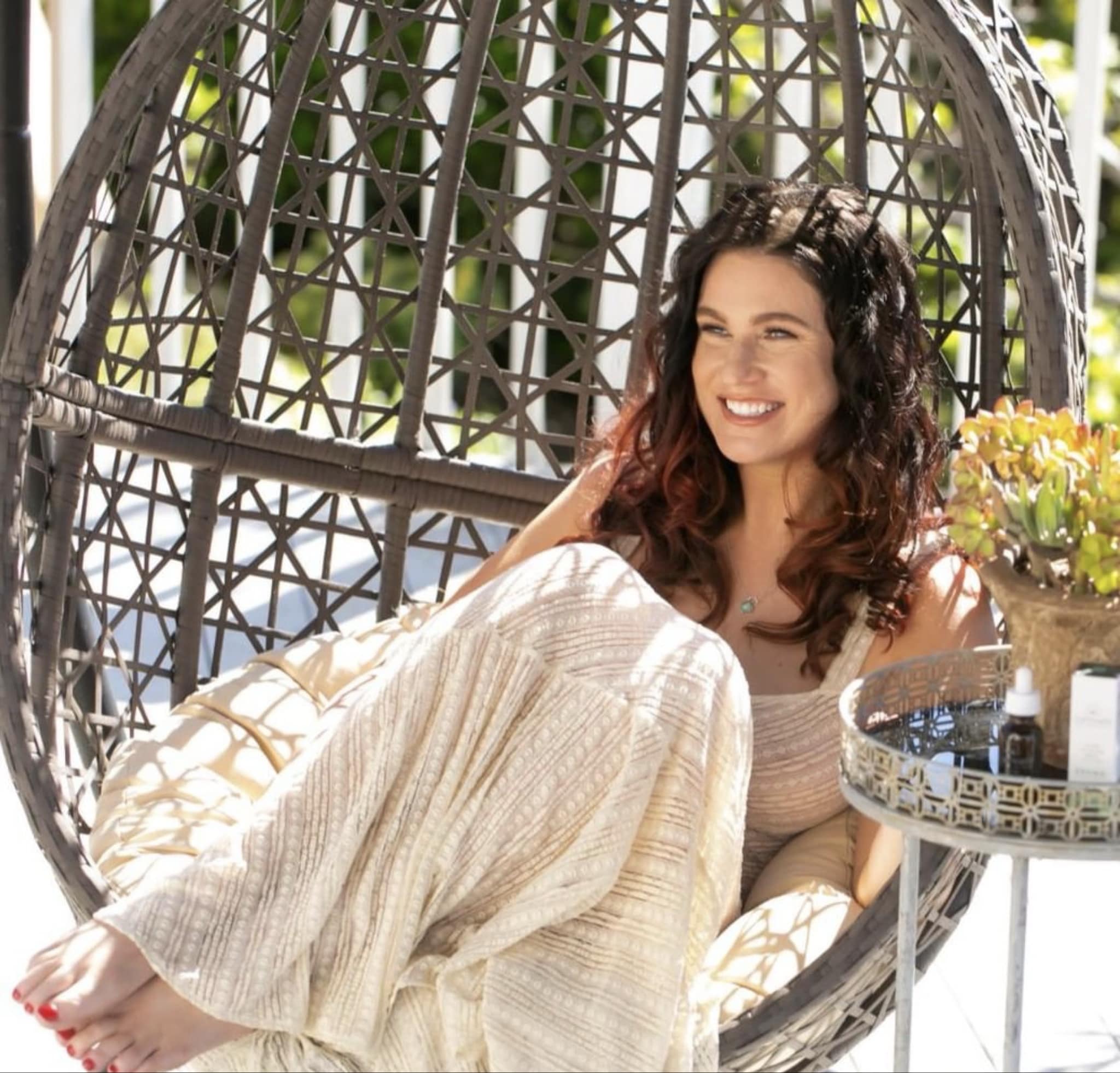
About Traci Edwards
Traci Edwards is the founder of Let's Get Unstuck, a personal growth platform born from her own journey through feeling stuck, afraid, and uncertain at 44. After discovering transformational coaching wisdom that changed her life, she created this space to share the voices, stories, and insights that helped her—and might help you too.
Through honest reflections and curated coaching segments, Traci invites others to explore what it means to get unstuck, find purpose, and live with more courage and clarity.
More Posts You Might Like
Continue exploring stories and insights
My Mother-In-Law Pressured Me to Have a Baby and Almost Broke Me
Ali Hall has known since childhood that she wanted to live a childfree life, but choosing not to hav...
.jpeg)
Grief and Aikido: Relaxing Under Pressure
In this thoughtful reflection, Gyani Richards explores how the principles of Aikido offer a powerful...
Why a Dietitian is the Missing Piece in Your Perimenopause Journey
Kelly is a wife, a mom of three, and a lifelong athlete. When she began navigating perimenopause her...
Good Girl Syndrome Gave Me a Dissociative Disorder
"I had officially become the good girl, and all it cost me was my sense of self." Writer, journal...
Let's Talk About It (0 comments)
Leave a Comment
Be the first to share your thoughts!